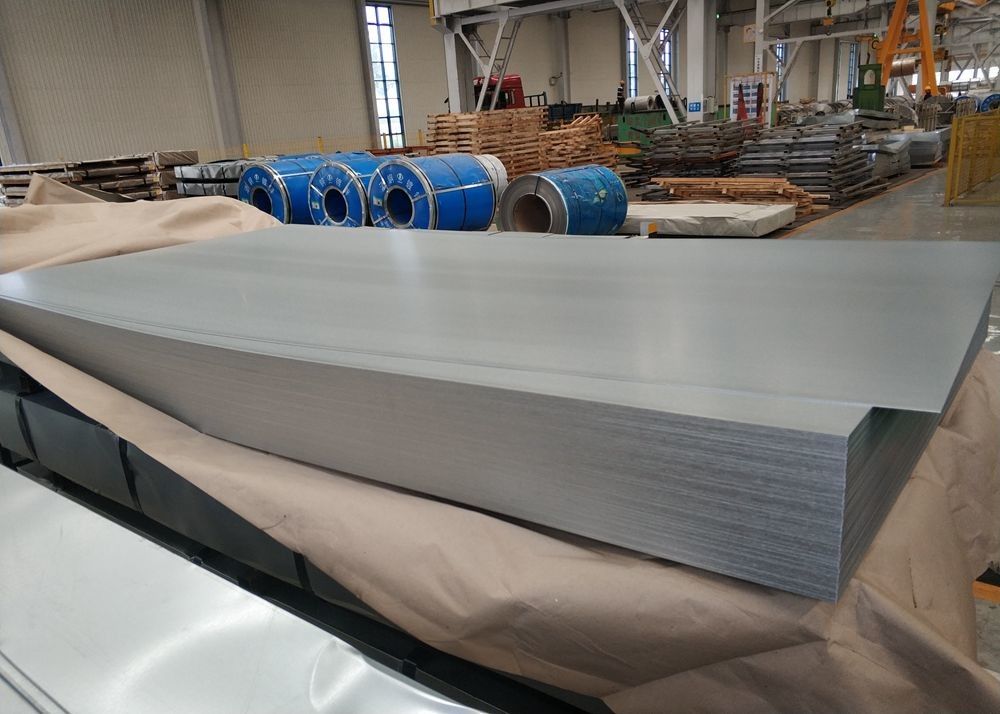
Zero Spangle Hot Dipped Galvanized Steel Sheet Q235 Q345 40–275 g/m² for Corrosion-Resistant Fabrication and Industrial Applications
1. Product Overview
Zero spangle hot dipped galvanized steel sheet is designed for applications that require improved surface uniformity, better post-coating performance, and stable forming quality. Compared with regular spangle surface, zero spangle offers a smoother and more uniform appearance, making it more suitable for coating, laminating, and appearance-sensitive fabrication.
Typical issues in practical use include:
Visible spangle affecting coating appearance
- Unstable adhesion in painting or lamination processes
- Surface inconsistency influencing precision fabrication and visual quality
For applications requiring both basic corrosion protection and better surface consistency, zero spangle galvanized steel sheet is a more targeted option.
2. Technical Solution
Zero spangle hot dipped galvanized steel sheet is produced by controlling crystallization conditions during the galvanizing process, resulting in a smoother surface with no obvious spangle pattern. Its corrosion resistance still comes from the hot-dipped zinc layer, while the surface morphology is optimized for downstream processing.
Key technical characteristics include:
- Zinc coating range: 40–450 g/m²
- Zinc layer provides barrier protection and sacrificial corrosion protection
- Zero spangle surface supports painting, lamination, and appearance control
- Chromated, oiled, or anti-fingerprint surface treatment can be selected for different processing needs
3. Specifications
|
Parameter
|
Value
|
|
Surface
|
Zero Spangle
|
|
Thickness
|
0.09–3.8 mm
|
|
Width
|
750–1500 mm
|
|
Length
|
Custom
|
|
Zinc Coating
|
40–450 g/m²
|
|
Surface Treatment
|
Chromated / Oiled / Anti-fingerprint
|
|
Standard
|
ASTM A653 / JIS G3302 / EN 10346
|
|
Steel Grade
|
Q235 / Q345 / SGCC / DX51D+Z
|
|
Minimum Order
|
50 MT
|
4. Application
Common applications of zero spangle hot dipped galvanized steel sheet include:
- Home appliance panels and inner parts
- Sheet metal parts requiring painting or lamination
- Industrial equipment panels and enclosures
- General structural parts and metal products
- Galvanized base sheet for further forming or cutting
This product is suitable for applications requiring both basic corrosion resistance and better surface consistency.
5. Processing / Usage
This product is typically supplied as sheet processed from galvanized steel coil, and then enters downstream fabrication. Typical steps include:
- Select zinc coating based on service environment
- Choose thickness and width according to design requirements
- Perform cutting, stamping, bending, or laminating
- Apply painting, assembly, or structural joining according to end use
Zero spangle surface is generally more suitable for process routes that require improved appearance consistency.
6. Advantages
- More uniform surface for painting and lamination
- Zinc coating range of 40–450 g/m² for different corrosion protection requirements
- Wide thickness and width range for various fabrication needs
- Optional chromated, oiled, or anti-fingerprint surface treatment
- Balances corrosion resistance with surface quality requirements
This makes it suitable for fabrication chains where surface performance matters.
7. How to Choose
The following points are useful when selecting this product:
- Choose zero spangle when painting or lamination is required
- Use Z275 or above for outdoor or high-humidity environments
- For indoor general use, lower coating levels may be selected depending on the environment
- If surface appearance is less critical and structural use is the priority, regular spangle may also be considered
- Surface treatment should be evaluated together with downstream processing requirements
8. FAQ
Q1: What is the difference between zero spangle and regular spangle?
Zero spangle has a smoother and more uniform surface, making it more suitable for painting, lamination, and appearance-sensitive parts. Regular spangle is more common for general structural and industrial use.
Q2: Is zero spangle suitable as a base material for painting?
Yes. Zero spangle is generally preferred when better coating appearance and surface consistency are required.
Q3: Does zero spangle affect corrosion resistance?
Corrosion resistance mainly depends on zinc coating mass and service environment. Zero spangle mainly affects surface appearance and downstream processing suitability.


 Your message must be between 20-3,000 characters!
 english
 français
 Deutsch
 Italiano
 Русский
 Español
 português
 Nederlandse
 ελληνικά
 日本語
日本語
 한국
한국