logo
Good price online

products details

Created with Pixso. Home Created with Pixso. Products Created with Pixso.
Prepainted Color Steel Coils
Created with Pixso. JIS Soft Commercial / Lock Forming PPGL Coil with AZ30–AZ150 Coating for Building Panels and Roofing Sheets

JIS Soft Commercial / Lock Forming PPGL Coil with AZ30–AZ150 Coating for Building Panels and Roofing Sheets

Brand Name: Huaye
MOQ: 50MT
Delivery Time: 45 days
Payment Terms: T/T or L/C
Detail Information
Place of Origin:
China
Certification:
ISO14000
Product Name:
Prepainted Color Steel Coil (PPGL Coil)
Brand:
Huaye
Base Metal:
Galvalume Steel Plate
Quality Type:
Soft Commercial Quality / Lock Forming Quality (LFQ)
Thickness:
0.2–1.2 Mm
Width:
700–1250 Mm
Color:
White / Blue / Customized As Per RAL Color
AZ Coating:
AZ30–AZ150 G/m²
Paint Type:
Polyester / SMP / PVDF / HDP / RMP
Coating Structure:
2/1
Front Paint Thickness:
15–25 μm
Back Paint Thickness:
5–10 μm
Coil Weight:
3–12 MT
Coil ID:
508 Mm / 610 Mm
Standard:
JIS / ASTM / BS / EN
Grade:
CQ / G550 / Grade33 / Grade37 / Grade40
Surface Treatment:
Normal Coated / RAL System / Customized Finish
Packing:
Standard Export Packing
Application:
Building / Roofing Sheet / Home Appliance / Container Plate
MOQ:
50 MT
Delivery Time:
45 Days
Payment Terms:
T/T / L/C
Packaging Details:
Standard export packing
Supply Ability:
10000MT
Highlight:

colour coated steel coils

,

galvanzied steel sheet

Product Description

JIS Soft Commercial / Lock Forming PPGL Coil with AZ30–AZ150 Coating for Building Panels and Roofing Sheets


1. Product Overview


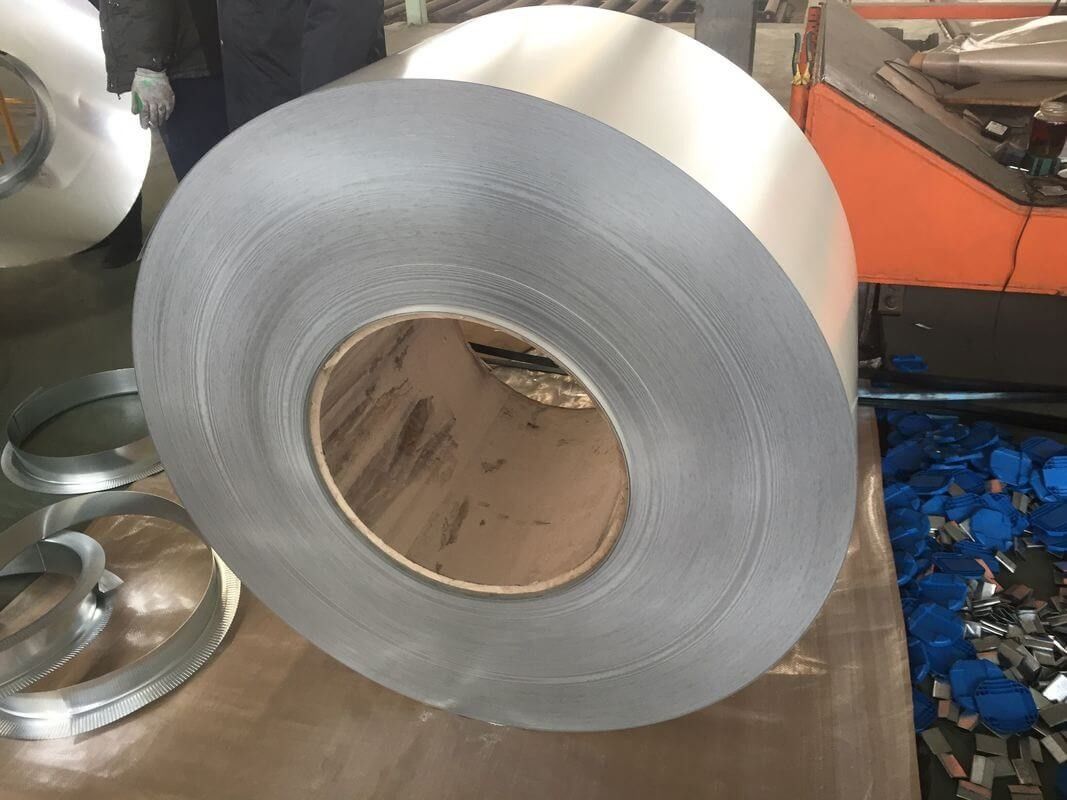
Prepainted color steel coil for building use is designed for roofing sheets, wall panels, appliance shells, and other visible sheet applications where both corrosion protection and surface appearance are required. In this specification, the base metal is galvalume steel plate, and the finished product is supplied in coated coil form for further roll forming, slitting, or cut-to-length production.


The thickness range of 0.2–1.2 mm and width range of 700–1250 mm cover mainstream building panel lines. Soft commercial quality is suitable for standard panel fabrication, while lock forming quality is more appropriate when the downstream process includes tighter bending or profile forming.


2. Technical Solution


Product performance is based on:


  • Aluminum-zinc coated steel substrate for base corrosion protection
  • Organic paint system providing an additional barrier layer
  • 2/1 coating structure for standard visible-side building applications
  • Front and back paint thickness balanced for exposure side and reverse side use
  • Soft commercial or LFQ quality matched to different forming requirements


For building sheets, final performance depends on the combined effect of substrate coating, paint type, paint thickness, and forming radius. Polyester is commonly used for standard projects, SMP and HDP are selected when higher weather resistance is needed, and PVDF is typically chosen for stronger UV stability and long-term exterior use.


3. Specifications


Parameter

Value

Product Type

Prepainted Color Steel Coil (PPGL)

Base Metal

Galvalume Steel Plate

Quality Type

Soft Commercial Quality / Lock Forming Quality

Thickness

0.2–1.2 mm

Width

700–1250 mm

Color

White / Blue / Customized RAL

AZ Coating

AZ30–AZ150 g/m²

Paint Type

Polyester / SMP / PVDF / HDP / RMP

Coating Structure

2/1

Front Paint Thickness

15–25 μm

Back Paint Thickness

5–10 μm

Coil Weight

3–12 MT

Coil ID

508 / 610 mm

Standard

JIS / ASTM / BS / EN

Grade

CQ / G550 / Grade33 / Grade37 / Grade40


4. Application


  • Roofing sheets for steel structure workshops and warehouses
  • Wall cladding and facade panels
  • Airport and storeroom building panels
  • Home appliance outer panels
  • Container and light enclosure sheet parts
  • General construction, furniture, and electrical equipment sheet fabrication


5. Processing


  • Cut-to-length sheet production
  • Slitting into narrower strips
  • Roll forming into roofing and wall profiles
  • Lock forming and edge folding
  • Protective film application on the top side when required
  • Custom cutting and slitting according to project designation


6. Advantages


  • 0.2–1.2 mm thickness range fits mainstream roofing and cladding applications
  • 700–1250 mm width range is suitable for common roll-forming lines
  • AZ30–AZ150 substrate range supports different corrosion protection requirements
  • Soft commercial quality and LFQ options improve forming flexibility
  • 2/1 coating structure is suitable for standard building panel production
  • Multiple paint systems allow selection by climate, exposure level, and service expectation


7. How to Choose


  • Standard indoor or mild outdoor building panels → polyester is commonly selected
  • Projects requiring better weather resistance → SMP or HDP is often preferred
  • Long-term exterior exposure and higher UV demand → PVDF is usually selected
  • General roll forming → soft commercial quality is commonly sufficient
  • Tighter profile bending or lock forming → LFQ is usually preferred
  • More demanding corrosion environment → higher AZ coating such as AZ100–AZ150 is commonly selected


8. FAQ


Q1: Is this product PPGI or PPGL?
This specification is aligned as PPGL because the source gives galvalume steel plate as the base metal and AZ30–AZ150 as the substrate coating range.


Q2: What does 2/1 coating structure mean?
It generally means the exposed side receives a primer plus topcoat system, while the reverse side receives one backing coat for standard service conditions.


Q3: What is the difference between soft commercial quality and lock forming quality?
Soft commercial quality is used for general panel production, while lock forming quality is selected when the downstream process requires stronger bending adaptability.


Q4: Can this coil be processed into roofing sheets?
Yes. It is commonly cut, slit, and roll formed into roofing and wall cladding profiles.


Q5: Which paint system is more suitable for exterior building use?
Polyester is common for standard projects, while SMP, HDP, and PVDF are preferred when stronger weather resistance or longer outdoor service life is required.